
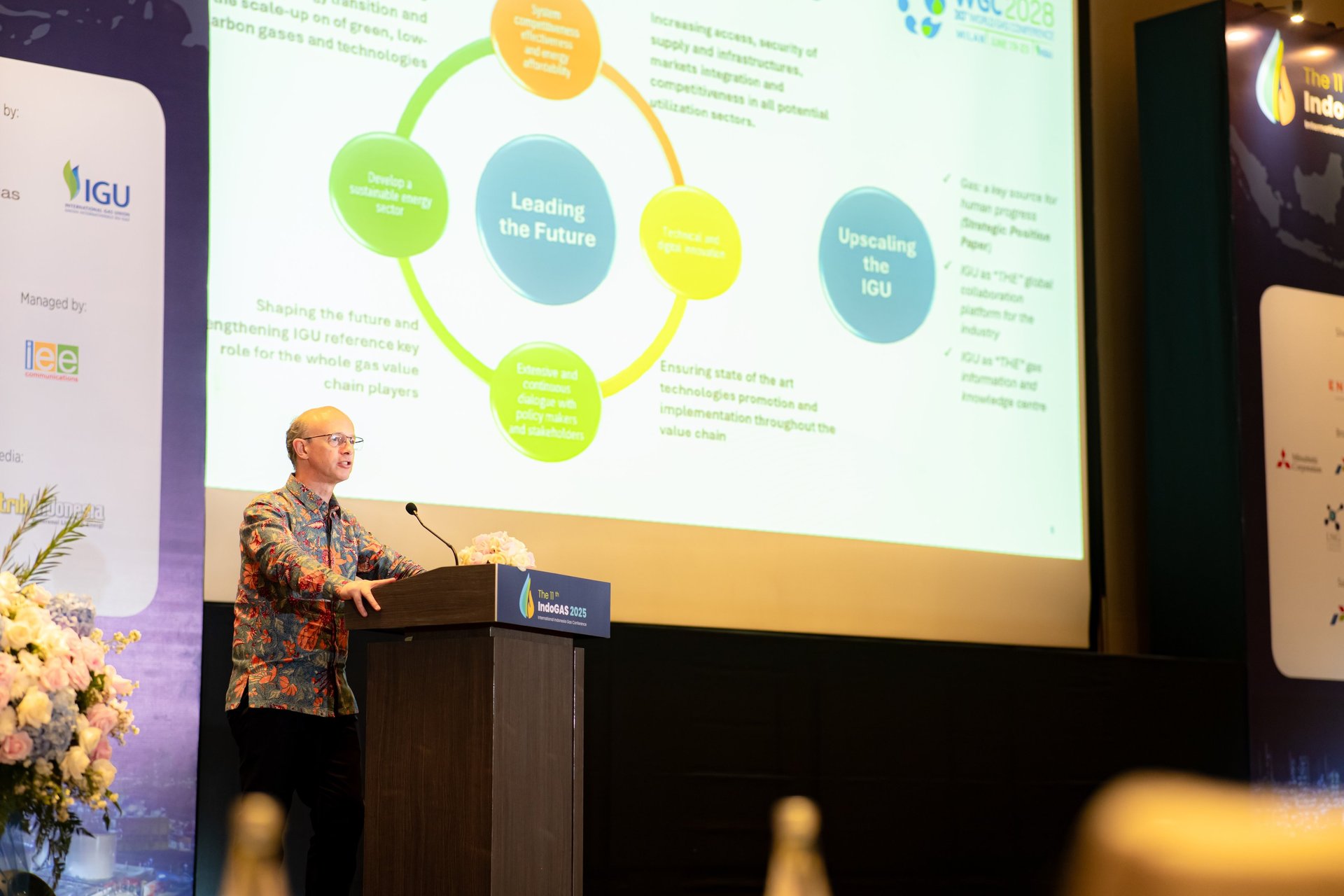
Strategic Duet Towards Net Zero and Future Strategic Solutions
NEWS
Donny Adhiyasa (Viva.co.id)
6/24/2025
In the global effort to drive a cleaner energy transformation, the Asia-Pacific region, including Indonesia, faces a complex challenge: how to provide low-emission, reliable, and affordable energy.
In this context, natural gas is no longer seen as a temporary solution, but rather as part of a key energy transition strategy. Gas is not intended to compete with new and renewable energy (NRE), but rather to complement it. With its operational flexibility, relatively quick implementation times, and infrastructure adaptable to future technologies, gas holds a strategic role in supporting the nation's continuously transforming energy system.
Indonesia has set a long-term target of achieving net-zero emissions between 2050 and 2060.
With its flexibility, speed of implementation, and support for low-carbon technologies, natural gas has proven to be a crucial partner for renewable energy. Indonesia is uniquely positioned to bridge the need for clean energy while addressing the region's affordability and reliability challenges.
This commitment is designed to align with the targets of sustainable economic growth and expanding equitable energy access across the region, including the 3T (disadvantaged, frontier, and outermost) regions. Based on the 2025–2034 Electricity Supply Business Plan (RUPTL), the government is targeting an additional 69.2 GW of generating capacity through optimization. Approximately 42 GW, or 61%, of this increase is projected to come from renewable sources such as solar, wind, hydro, geothermal, and bioenergy.
The contribution of gas-based power plants will be reduced from 15.2 GW to 10.3 GW, while battery energy storage systems (BESS) will be increased from 4.6 GW to 6.0 GW to support system flexibility and reliability. Currently, the renewable energy mix has reached 14.5% in 2024—a progressive achievement demonstrating a consistent policy direction. The target of increasing this figure to 23% by 2025 and 31%–35% by 2030 will continue to be pursued through a combination of adaptive policies, incentives, and investment strategies.
Natural Gas: A Practical Solution
Supporting Reliability The HSD conversion program at 41 gas-based power plants, which began in March 2025, is a concrete step demonstrating how gas can strengthen the national energy system. With better cost efficiency and shorter construction times than large-scale renewable energy projects, this program can close the supply gap, especially in regions with limited energy access.
Furthermore, additional power plants will be built based on the availability of gas supply and infrastructure. Furthermore, the gas infrastructure currently under construction—such as FSRUs and gas pipelines—is being prepared with a long-term vision, ensuring compatibility with hydrogen and CCS technologies. In other words, gas is not only part of a medium-term solution but is also designed to support and accompany the full transition to a clean energy system. Low Carbon Technology: The Evolution of Gas
Towards the Energy of the Future
Gas utilization is now in a transformational phase. The old narrative that equates gas with conventional fossil fuels no longer reflects current technological advances. Various countries in the region have begun implementing low-carbon technologies for gas, including bio-LNG, digital methane leak monitoring systems, and the integration of hydrogen-ready pipelines.
Indonesia is also on a similar path. Presidential Regulation No. 14 of 2024 provides a crucial legal basis for the development of cross-border carbon storage facilities. Initiatives such as the Tangguh CCUS project (BP) and the Sunda-Asri CCS Hub (Pertamina–ExxonMobil) demonstrate that Indonesia is not simply following trends but is also shaping the future of low-carbon energy.
Hybrid Model
Combining Reliability and Sustainability The future energy transition requires an approach that is both idealistic and realistic. The hybrid model—which combines gas-based generation, renewable energy such as solar power plants, and battery storage—has been implemented in various countries as a solution for a resilient, adaptive, and sustainable energy system.
Indonesia has adopted this approach through various strategic projects such as the Java Satu FSRU, the dedieselization program, the gasification program, and the planned integration of batteries into the renewable energy system. This strategy stems from an understanding of the national geographic and socio-economic conditions, enabling it to realize an inclusive energy system based on energy justice.
Collaboration Region: Towards a Just and Inclusive Transition
As a country with a strategic position in the region, Indonesia also encourages a collaborative approach to the energy transition. Through synergy between gas and renewable energy, the Asia-Pacific region has a significant opportunity to accelerate the achievement of the net-zero target, without sacrificing supply reliability or affordability. This call is not just about technology, but also about trust, a spirit of collaborative learning, and a determination to build an energy future that leaves no one behind.
"National energy needs cannot be postponed, while the transition to renewable energy cannot be accelerated without a strong foundation. Amid industrial growth, surging electricity demand, and commitments to the net-zero target, gas is the only energy source capable of meeting short-term needs while supporting long-term sustainability," said Aris Mulya Azof, Chairman of the Indonesia Gas Society.
"The challenge is not just about supply, but how we build infrastructure, connect reserves in remote areas to demand centers, and create a policy ecosystem that allows gas to play its maximum role in the journey to net-zero," he explained.
This is the central role of IndoGAS 2025: as a strategic forum that brings together cross-sector stakeholders, reinforcing the narrative that gas is an integral pillar of the transition. Amid the urgency of achieving equitable and realistic decarbonization, IndoGAS 2025 provides a space to expand collaboration, accelerate the adoption of low-carbon technologies, and establish gas as the foundation of a relevant energy transformation for Indonesia and the region.

>
Strategic Duet Towards Net Zero and Future Strategic Solutions
>
>
In the global effort to drive a cleaner energy transformation, the Asia-Pacific region, including Indonesia, faces a complex challenge: how to provide low-emission, reliable, and affordable energy.
In this context, natural gas is no longer seen as a temporary solution, but rather as part of a key energy transition strategy. Gas is not intended to compete with new and renewable energy (NRE), but rather to complement it. With its operational flexibility, relatively quick implementation times, and infrastructure adaptable to future technologies, gas holds a strategic role in supporting the nation's continuously transforming energy system.
Indonesia has set a long-term target of achieving net-zero emissions between 2050 and 2060.
With its flexibility, speed of implementation, and support for low-carbon technologies, natural gas has proven to be a crucial partner for renewable energy. Indonesia is uniquely positioned to bridge the need for clean energy while addressing the region's affordability and reliability challenges.
This commitment is designed to align with the targets of sustainable economic growth and expanding equitable energy access across the region, including the 3T (disadvantaged, frontier, and outermost) regions. Based on the 2025–2034 Electricity Supply Business Plan (RUPTL), the government is targeting an additional 69.2 GW of generating capacity through optimization. Approximately 42 GW, or 61%, of this increase is projected to come from renewable sources such as solar, wind, hydro, geothermal, and bioenergy.
The contribution of gas-based power plants will be reduced from 15.2 GW to 10.3 GW, while battery energy storage systems (BESS) will be increased from 4.6 GW to 6.0 GW to support system flexibility and reliability. Currently, the renewable energy mix has reached 14.5% in 2024—a progressive achievement demonstrating a consistent policy direction. The target of increasing this figure to 23% by 2025 and 31%–35% by 2030 will continue to be pursued through a combination of adaptive policies, incentives, and investment strategies.
Natural Gas: A Practical Solution
Supporting Reliability The HSD conversion program at 41 gas-based power plants, which began in March 2025, is a concrete step demonstrating how gas can strengthen the national energy system. With better cost efficiency and shorter construction times than large-scale renewable energy projects, this program can close the supply gap, especially in regions with limited energy access.
Furthermore, additional power plants will be built based on the availability of gas supply and infrastructure. Furthermore, the gas infrastructure currently under construction—such as FSRUs and gas pipelines—is being prepared with a long-term vision, ensuring compatibility with hydrogen and CCS technologies. In other words, gas is not only part of a medium-term solution but is also designed to support and accompany the full transition to a clean energy system. Low Carbon Technology: The Evolution of Gas
Towards the Energy of the Future
Gas utilization is now in a transformational phase. The old narrative that equates gas with conventional fossil fuels no longer reflects current technological advances. Various countries in the region have begun implementing low-carbon technologies for gas, including bio-LNG, digital methane leak monitoring systems, and the integration of hydrogen-ready pipelines.
Indonesia is also on a similar path. Presidential Regulation No. 14 of 2024 provides a crucial legal basis for the development of cross-border carbon storage facilities. Initiatives such as the Tangguh CCUS project (BP) and the Sunda-Asri CCS Hub (Pertamina–ExxonMobil) demonstrate that Indonesia is not simply following trends but is also shaping the future of low-carbon energy.
Hybrid Model
Combining Reliability and Sustainability The future energy transition requires an approach that is both idealistic and realistic. The hybrid model—which combines gas-based generation, renewable energy such as solar power plants, and battery storage—has been implemented in various countries as a solution for a resilient, adaptive, and sustainable energy system.
Indonesia has adopted this approach through various strategic projects such as the Java Satu FSRU, the dedieselization program, the gasification program, and the planned integration of batteries into the renewable energy system. This strategy stems from an understanding of the national geographic and socio-economic conditions, enabling it to realize an inclusive energy system based on energy justice.
Collaboration Region: Towards a Just and Inclusive Transition
As a country with a strategic position in the region, Indonesia also encourages a collaborative approach to the energy transition. Through synergy between gas and renewable energy, the Asia-Pacific region has a significant opportunity to accelerate the achievement of the net-zero target, without sacrificing supply reliability or affordability. This call is not just about technology, but also about trust, a spirit of collaborative learning, and a determination to build an energy future that leaves no one behind.
"National energy needs cannot be postponed, while the transition to renewable energy cannot be accelerated without a strong foundation. Amid industrial growth, surging electricity demand, and commitments to the net-zero target, gas is the only energy source capable of meeting short-term needs while supporting long-term sustainability," said Aris Mulya Azof, Chairman of the Indonesia Gas Society.
"The challenge is not just about supply, but how we build infrastructure, connect reserves in remote areas to demand centers, and create a policy ecosystem that allows gas to play its maximum role in the journey to net-zero," he explained.
This is the central role of IndoGAS 2025: as a strategic forum that brings together cross-sector stakeholders, reinforcing the narrative that gas is an integral pillar of the transition. Amid the urgency of achieving equitable and realistic decarbonization, IndoGAS 2025 provides a space to expand collaboration, accelerate the adoption of low-carbon technologies, and establish gas as the foundation of a relevant energy transformation for Indonesia and the region.
>
Strategic Duet Towards Net Zero and Future Strategic Solutions
>
>
Office:
Rasuna Office Park, 3rd Floor Unit TO-07
Complex Rasuna Epicentrum
Jl. HR. Rasuna Said, Kuningan, Jakarta 12960
Tel : +62 21 8378 3757, 8379 5203
Fax : +62 21 8378 1126, 8379 5302
Email : secretariat@indonesiangassociety.com
© 2014. Indonesian Gas Society. All rights reserved.
Mailing Address:
Jl.Kebon Baru 3 No.4 RT.03/RW.09 Tebet, Asem Baris,Jakarta Selatan, 12830