
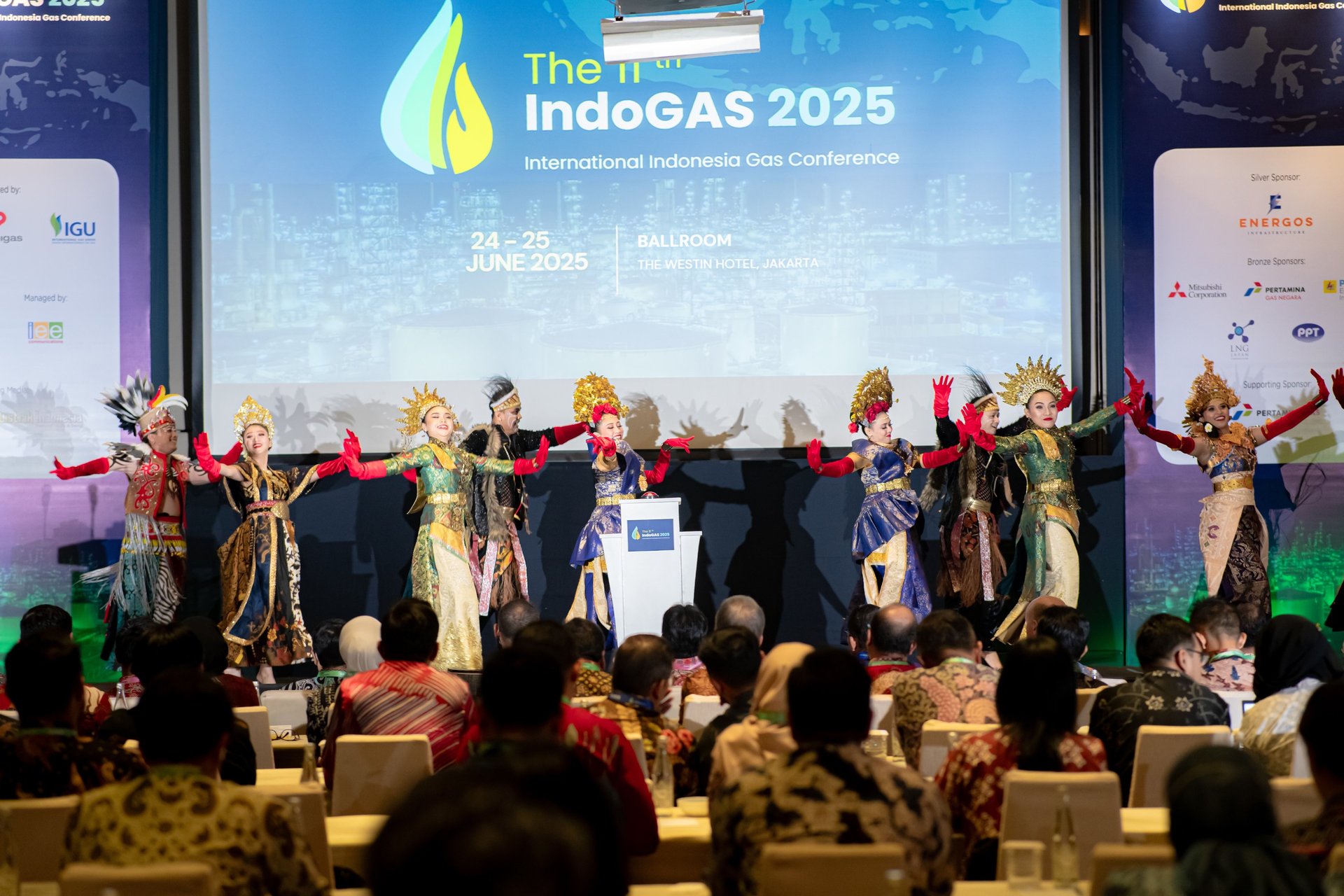
IndoGas 2025
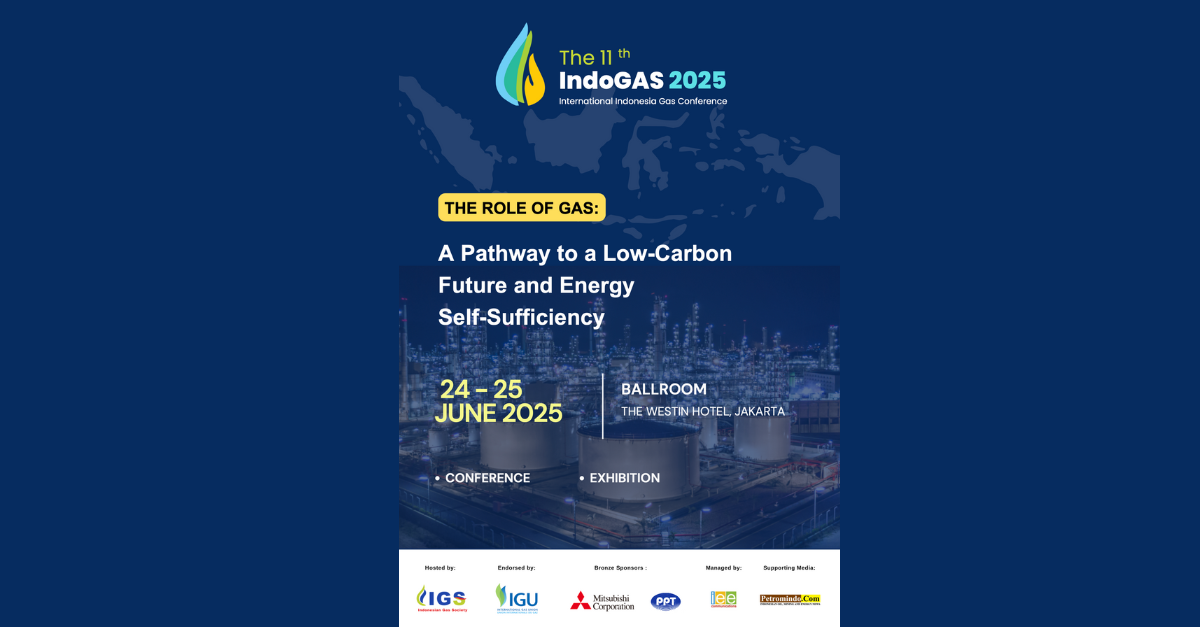
24-25 June 2025, Ballroom The Westin-Jakarta
1. The Role of Gas as Key to Energy Transition and Supply Security
The conference emphasized that natural gas is not merely a transition fuel but is evolving into a "destination energy" to complement renewables in achieving the 2060 net-zero target. Globally, gas remains vital, accounting for nearly one-third of the increase in energy demand last year and meeting a quarter of the world's energy needs. Domestically, gas is crucial for maintaining grid stability as a "peaker" source to counterbalance the intermittent nature of renewables, particularly to meet the surging demand from data centers and industrial sectors.
2. Infrastructure Challenges: Geographic Gaps and LNG Logistics
A primary domestic challenge is the geographical mismatch, where gas reserves are concentrated in Eastern Indonesia while the highest demand lies in the West (Java and Sumatra). This necessitates accelerated investment in infrastructure, such as pipelines, regasification terminals, and Floating Storage and Regasification Units (FSRUs) to bridge the supply gap. Additionally, the LNG shipping sector lags behind with an aging fleet and reliance on foreign vessels, making fleet renewal and the flexible application of cabotage principles urgent priorities for ensuring national energy sovereignty.



IndoGas 2025
>
>
>
3. Global Dynamics and ESG-Based Financing
On the global stage, the Asia-Pacific region is projected to dominate, accounting for up to 74% of global LNG demand by 2050. However, the market faces a potential oversupply phase between 2026 and 2034 due to new capacities from the US and Qatar. Regarding financing, investors are tightening requirements with a strong focus on ESG (Environmental, Social, and Governance) criteria. Consequently, gas projects now require clear decarbonization elements, such as Carbon Capture and Storage (CCS), and innovative funding models—such as Green Bonds or the Trustee Borrowing Scheme—to remain bankable and competitive.
1. The Role of Gas as Key to Energy Transition and Supply Security The conference emphasized that natural gas is not merely a transition fuel but is evolving into a "destination energy" to complement renewables in achieving the 2060 net-zero target. Globally, gas remains vital, accounting for nearly one-third of the increase in energy demand last year and meeting a quarter of the world's energy needs. Domestically, gas is crucial for maintaining grid stability as a "peaker" source to counterbalance the intermittent nature of renewables, particularly to meet the surging demand from data centers and industrial sectors.
2. Infrastructure Challenges: Geographic Gaps and LNG Logistics A primary domestic challenge is the geographical mismatch, where gas reserves are concentrated in Eastern Indonesia while the highest demand lies in the West (Java and Sumatra). This necessitates accelerated investment in infrastructure, such as pipelines, regasification terminals, and Floating Storage and Regasification Units (FSRUs) to bridge the supply gap. Additionally, the LNG shipping sector lags behind with an aging fleet and reliance on foreign vessels, making fleet renewal and the flexible application of cabotage principles urgent priorities for ensuring national energy sovereignty.


IndoGas 2025
>
>
>
3. Global Dynamics and ESG-Based Financing On the global stage, the Asia-Pacific region is projected to dominate, accounting for up to 74% of global LNG demand by 2050. However, the market faces a potential oversupply phase between 2026 and 2034 due to new capacities from the US and Qatar. Regarding financing, investors are tightening requirements with a strong focus on ESG (Environmental, Social, and Governance) criteria. Consequently, gas projects now require clear decarbonization elements, such as Carbon Capture and Storage (CCS), and innovative funding models—such as Green Bonds or the Trustee Borrowing Scheme—to remain bankable and competitive.
Office:
Rasuna Office Park, 3rd Floor Unit TO-07
Complex Rasuna Epicentrum
Jl. HR. Rasuna Said, Kuningan, Jakarta 12960
Tel : +62 21 8378 3757, 8379 5203
Fax : +62 21 8378 1126, 8379 5302
Email : secretariat@indonesiangassociety.com
© 2014. Indonesian Gas Society. All rights reserved.


Mailing Address:
Jl.Kebon Baru 3 No.4 RT.03/RW.09 Tebet, Asem Baris,Jakarta Selatan, 12830