
First Mini LNG Plant on Java Island Officially Operates in Pasuruan
GAS INDUSTRY NEWS
IGS Editorial Team
2/12/2026
The first mini liquefied natural gas (LNG) plant on Java Island, located in the Pasuruan Industrial Estate Rembang (PIER) Industrial Zone, Pasuruan, East Java, officially began operations on Tuesday (11/2/2026). This facility is operated by PT Likuid Nusantara Gas.
The inauguration was carried out by Deputy Minister of Energy and Mineral Resources Yuliot Tanjung and attended by the Argentine Ambassador to Indonesia, the Director of Downstream Oil and Gas Programs, the Director of Oil and Gas Engineering and Environment, representatives of SKK Migas (VP of Finance and Commercialization and Representative of Jabanusa), KKKS HCML, Jababeka management, the East Java Provincial Government, local police, and a number of stakeholders in East Java.
This mini LNG plant project was initiated on November 9, 2023, by PT Kawasan Industri Jababeka Tbk (KIJA). The facility stands on an area of 10,162 square meters with an open space plant concept and has a total investment value of US$ 16.898 million or around Rp 247.2 billion.
KIJA's President Director, Budianto Liman, previously stated that the construction of this mini LNG plant aims to support the government's program in increasing low-emission energy mix by providing liquefied natural gas for domestic industrial and commercial players.
“We are optimistic that this plant can support the government's joint efforts to provide clean and sustainable energy sources. We hope that it can become a solution for providing quality energy at increasingly competitive prices for consumers in Java and its surrounding areas,” said Budianto.
Budianto also said that the mini LNG plant project is the result of an acquisition by PT Jababeka Tbk through its subsidiary, PT Jababeka Infrastruktur, in PT Likuid Nusantara Gas. PT Jababeka Infrastruktur controls 60% of the shares, while the remaining 20% is owned by Fortius Corporation and individuals. This project has absorbed more than 120 workers since the construction phase.
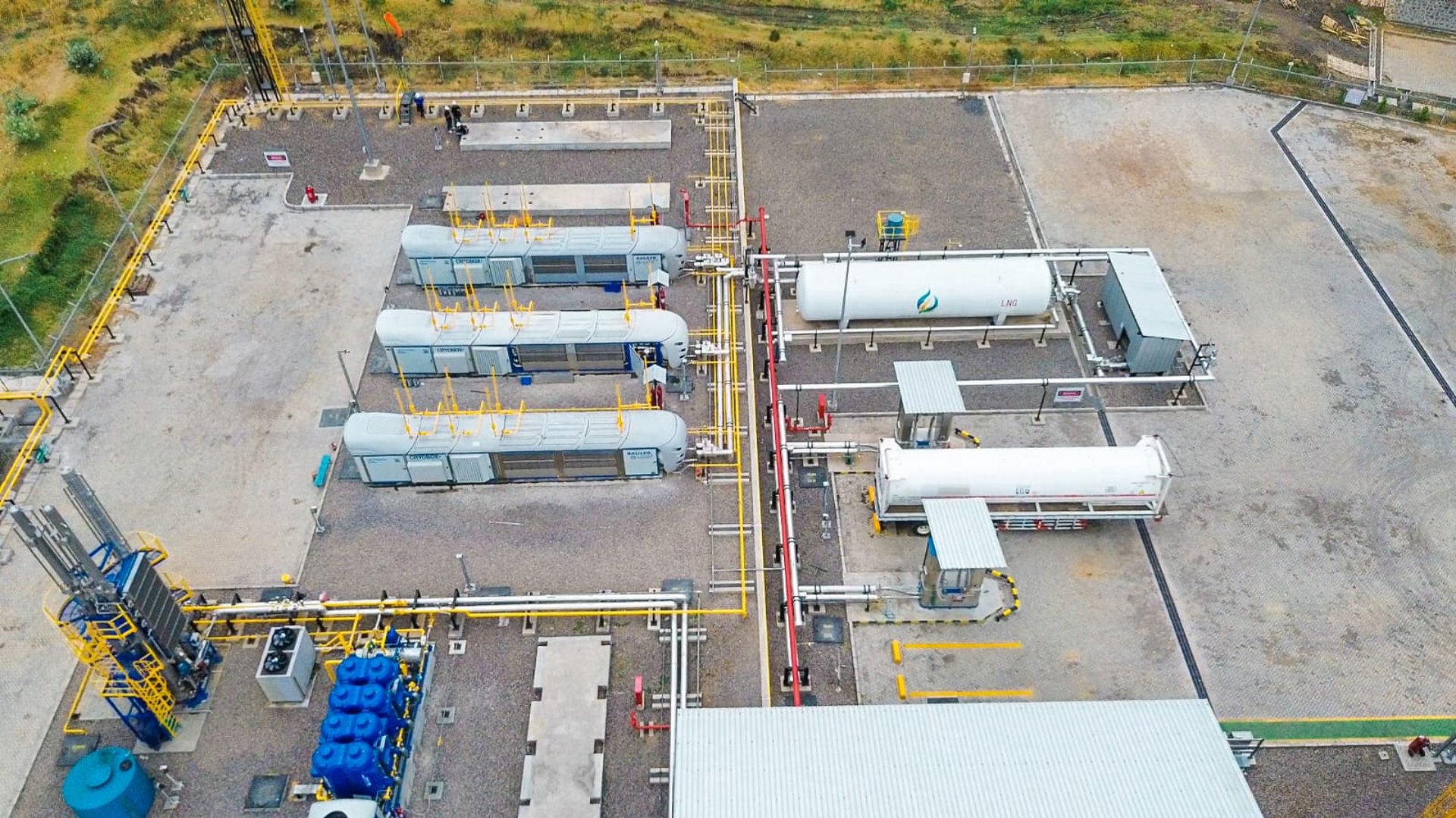
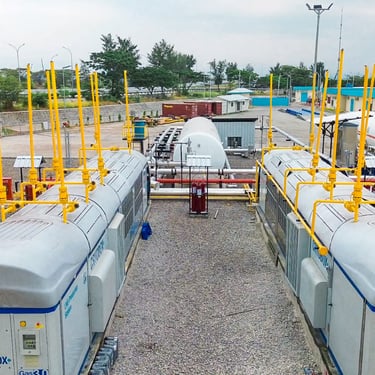
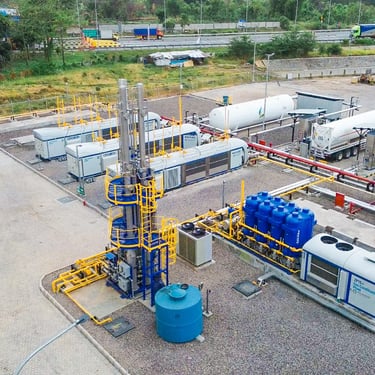
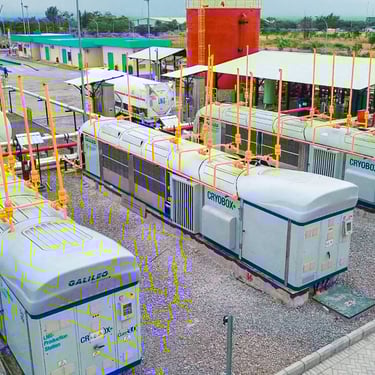
Technically, this mini LNG facility has three cryobox units to process pipeline gas into LNG, each with a capacity of approximately 0.9–1 MMSCFD. Currently, LNG production is in the range of 19–20 tons per day or around 7,000 tons per year. The maximum capacity of this plant reaches 2.5 MMSCFD per day in accordance with the allocated gas supply.
The LNG produced will be stored and distributed using 20-foot and 40-foot iso tanks, as well as small vessels (VGL 175 liters) transported by land vehicles without the need for a gas pipeline network.
President Director of PT Likuid Nusantara Gas, Wira Rahardja, said that the initial target market is focused on East Java before expanding to Central Java and Bali, with retail and commercial segments such as hotels, cafes, restaurants, shopping centers, and industries.
“In the near future, we can help meet the needs of tenants in the Pasuruan Industrial Estate Rembang, as well as hotels, restaurants, and malls in East Java and its surroundings,” said Wira.
Wira also highlighted the need for government support, particularly regarding the flexibility of mini LNG sales regulations to end users and the acceleration of the administrative process for issuing gas allocations.
PT Likuid Nusantara Gas hopes to obtain an additional gas volume of up to 2.5 MMSCFD in accordance with the allocation determined by the Ministry of Energy and Mineral Resources, considering that the current supply is still in the range of 0.9–1 MMSCFD.
Meanwhile, Deputy Minister of Energy and Mineral Resources Yuliot Tanjung said in his speech that Indonesia's upstream oil and gas sector still has the potential of 128 basins and 110 working areas that will be offered with an accelerated process under the Ministry of Energy and Mineral Resources to support national energy independence.
He added that the 2026 oil lifting target in accordance with the state budget is at a minimum of 610 thousand barrels per day and is encouraged to increase to around 630-665 thousand barrels per day by utilizing the flexibility stipulated in ESDM Regulation No. 14 of 2025.
The Ministry of Energy and Mineral Resources is currently conducting a study on improving regulations on LNG allocation and tiered sales, developing mini LNG as an alternative energy source to replace LPG and fuel oil, technological cooperation with Argentina, and optimizing production to increase annual lifting targets.
This mini LNG facility has a domestic content level (TKDN) of around 86.27% and is claimed to be able to reduce emissions by around 23-25% compared to the use of conventional fuels.
With the operation of the first mini LNG refinery on the island of Java, it is hoped that gas distribution can reach more industrial and commercial sectors that are not yet connected to the pipeline network, while supporting the national energy independence and transition agenda.
The first mini liquefied natural gas (LNG) plant on Java Island, located in the Pasuruan Industrial Estate Rembang (PIER) Industrial Zone, Pasuruan, East Java, officially began operations on Tuesday (11/2/2026). This facility is operated by PT Likuid Nusantara Gas.
The inauguration was carried out by Deputy Minister of Energy and Mineral Resources Yuliot Tanjung and attended by the Argentine Ambassador to Indonesia, the Director of Downstream Oil and Gas Programs, the Director of Oil and Gas Engineering and Environment, representatives of SKK Migas (VP of Finance and Commercialization and Representative of Jabanusa), KKKS HCML, Jababeka management, the East Java Provincial Government, local police, and a number of stakeholders in East Java.
This mini LNG plant project was initiated on November 9, 2023, by PT Kawasan Industri Jababeka Tbk (KIJA). The facility stands on an area of 10,162 square meters with an open space plant concept and has a total investment value of US$ 16.898 million or around Rp 247.2 billion.
KIJA's President Director, Budianto Liman, previously stated that the construction of this mini LNG plant aims to support the government's program in increasing low-emission energy mix by providing liquefied natural gas for domestic industrial and commercial players.
“We are optimistic that this plant can support the government's joint efforts to provide clean and sustainable energy sources. We hope that it can become a solution for providing quality energy at increasingly competitive prices for consumers in Java and its surrounding areas,” said Budianto.
Budianto also said that the mini LNG plant project is the result of an acquisition by PT Jababeka Tbk through its subsidiary, PT Jababeka Infrastruktur, in PT Likuid Nusantara Gas. PT Jababeka Infrastruktur controls 60% of the shares, while the remaining 20% is owned by Fortius Corporation and individuals. This project has absorbed more than 120 workers since the construction phase.
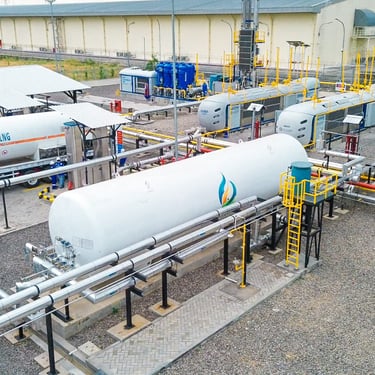
Technically, this mini LNG facility has three cryobox units to process pipeline gas into LNG, each with a capacity of approximately 0.9–1 MMSCFD. Currently, LNG production is in the range of 19–20 tons per day or around 7,000 tons per year. The maximum capacity of this plant reaches 2.5 MMSCFD per day in accordance with the allocated gas supply.
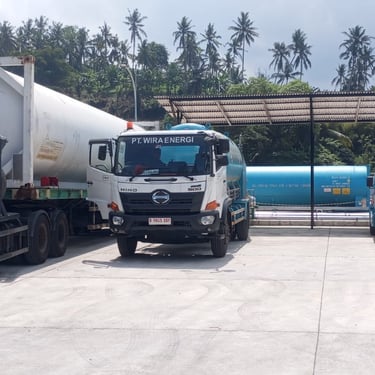
The LNG produced will be stored and distributed using 20-foot and 40-foot iso tanks, as well as small vessels (VGL 175 liters) transported by land vehicles without the need for a gas pipeline network.
President Director of PT Likuid Nusantara Gas, Wira Rahardja, said that the initial target market is focused on East Java before expanding to Central Java and Bali, with retail and commercial segments such as hotels, cafes, restaurants, shopping centers, and industries.
“In the near future, we can help meet the needs of tenants in the Pasuruan Industrial Estate Rembang, as well as hotels, restaurants, and malls in East Java and its surroundings,” said Wira.
Wira also highlighted the need for government support, particularly regarding the flexibility of mini LNG sales regulations to end users and the acceleration of the administrative process for issuing gas allocations.
PT Likuid Nusantara Gas hopes to obtain an additional gas volume of up to 2.5 MMSCFD in accordance with the allocation determined by the Ministry of Energy and Mineral Resources, considering that the current supply is still in the range of 0.9–1 MMSCFD.
Meanwhile, Deputy Minister of Energy and Mineral Resources Yuliot Tanjung said in his speech that Indonesia's upstream oil and gas sector still has the potential of 128 basins and 110 working areas that will be offered with an accelerated process under the Ministry of Energy and Mineral Resources to support national energy independence.
He added that the 2026 oil lifting target in accordance with the state budget is at a minimum of 610 thousand barrels per day and is encouraged to increase to around 630-665 thousand barrels per day by utilizing the flexibility stipulated in ESDM Regulation No. 14 of 2025.
The Ministry of Energy and Mineral Resources is currently conducting a study on improving regulations on LNG allocation and tiered sales, developing mini LNG as an alternative energy source to replace LPG and fuel oil, technological cooperation with Argentina, and optimizing production to increase annual lifting targets.
This mini LNG facility has a domestic content level (TKDN) of around 86.27% and is claimed to be able to reduce emissions by around 23-25% compared to the use of conventional fuels.
With the operation of the first mini LNG refinery on the island of Java, it is hoped that gas distribution can reach more industrial and commercial sectors that are not yet connected to the pipeline network, while supporting the national energy independence and transition agenda.
Office:
Rasuna Office Park, 3rd Floor Unit TO-07
Complex Rasuna Epicentrum
Jl. HR. Rasuna Said, Kuningan, Jakarta 12960
Tel : +62 21 8378 3757, 8379 5203
Fax : +62 21 8378 1126, 8379 5302
Email : secretariat@indonesiangassociety.com
© 2014. Indonesian Gas Society. All rights reserved.

Mailing Address:
Jl.Kebon Baru 3 No.4 RT.03/RW.09 Tebet, Asem Baris,Jakarta Selatan, 12830