
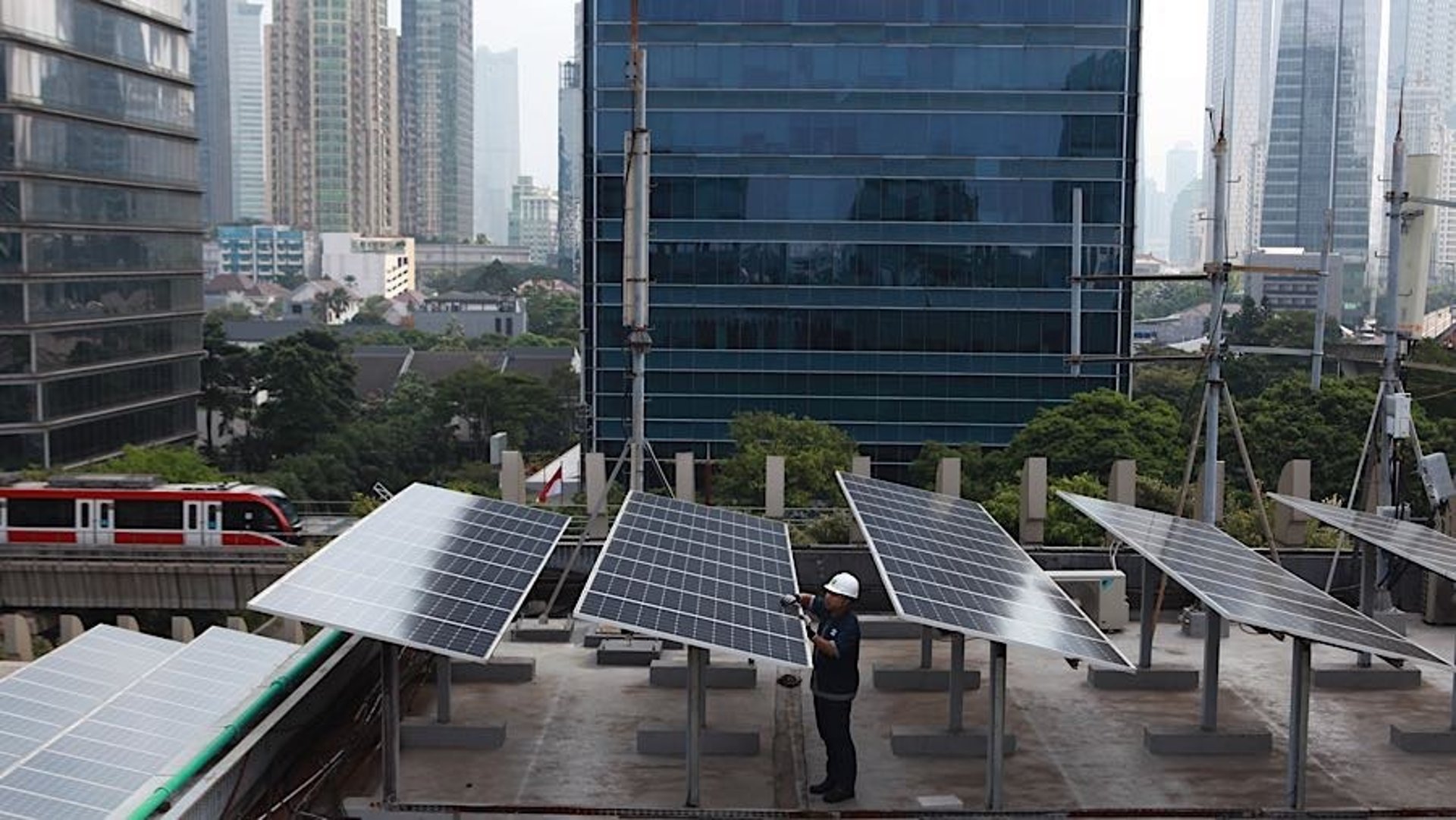
ESDM Reveals 5 Key Challenges to Indonesia's Energy Transition This Year
GAS INDUSTRY NEWS
Sabrina Mulia Rhamadanty (Bloombergtechnoz)
6/10/2026
The Ministry of Energy and Mineral Resources (ESDM) outlined five key challenges facing Indonesia in accelerating its energy transition this year.
This was conveyed by Harris, Secretary of the Directorate General of New, Renewable Energy, and Energy Conservation (EBTKE) at the Ministry of Energy and Mineral Resources, during the ESSA Summit Indonesia 2026, held on Tuesday (June 9, 2026).
The first obstacle concerns the integration of electricity transmission and distribution.
Harris explained that Java still dominates electricity demand, accounting for 60% to 70% of the total. Meanwhile, renewable energy sources are abundant outside Java, such as Sumatra, Kalimantan, and Sulawesi.
"To address this imbalance, the government is preparing a long-term plan to connect the inter-island grid. In addition to the interconnection to Bali, which is already underway, the government plans to connect Kalimantan and Sumatra to Java," Harris said.
Harris believes the target of connecting the electricity grid from Kalimantan to Sulawesi is intended to meet mining needs in the Sulawesi region, particularly for the development of green mining.
"We also know that Sulawesi has potential mineral resources, and we want to provide a large supply of renewable energy to develop green mining. So we need to connect Kalimantan and Sulawesi," he explained.
Second, regarding the harmonization of regulatory aspects.
To address this obstacle, Harris said the government continues to move dynamically by revising the National Energy Policy (KEN) from 2017 to 2024 to accommodate long-term planning, while also encouraging the preparation of the New and Renewable Energy (EBET) Bill.
"Currently, the legal framework is being developed, including government regulations, regional regulations, ministerial regulations, and the drafting of the EBT Law," he said.
It should be noted that the EBET Bill—which serves as the highest legal umbrella for regulating the EBT electricity purchase price formula, tax incentives, and carbon taxes—has not yet been officially enacted by the government.
Meanwhile, the KEN has been revised through Government Regulation (PP) No. Government Regulation No. 40/2025, which was officially enacted on September 15, 2025, also revoked the previous regulation, Government Regulation No. 79 of 2014.
In this revision, the renewable energy mix target, originally set at 23% by 2025, was adjusted more realistically to around 17%–19% by 2025.
Funding
Third, economies of scale and funding. Harris said the government needs to make renewable energy projects economically viable and attractive to investors.
"Regarding this, the government is committed to continuing to formulate investment-friendly incentives and regulations to encourage the influx of green finance," he said.
As an illustration, based on estimates by the Just Energy Transition Partnership (JETP), Indonesia requires an investment of around US$20 billion just for the initial phase of decarbonizing the electricity sector until 2030. Meanwhile, the total requirement by 2060 reaches more than US$1 trillion.
To realize PLN's 2025-2034 Electricity Supply Business Plan (RUPTL), the Ministry of Energy and Mineral Resources (ESDM) noted that an investment of IDR 2,967.4 trillion is required, which will be used for the construction of power plants, transmission networks, distribution, and village electrification programs.
Fourth, domestic industrial readiness. Harris stated that the government is currently highlighting the importance of maximizing local manufacturing capacity given the enormous potential of the domestic renewable energy market.
"Indonesia must be able to optimize its domestic industry so that it is not merely a market for foreign products," he said.
This relates to the mandatory domestic component level (TKDN) for supporting industries. For example, the current TKDN regulation for Solar Power Plants (PLTS) requires a minimum of 40% local components.
However, the majority of the solar panel manufacturing industry in Indonesia is currently only capable of the assembly stage. Indonesia does not yet have an upstream factory that produces ingots and wafers (the basic materials for solar cells).
Fifth, social aspects and community acceptance. In some cases, the government continues to encounter resistance from local communities regarding the development of renewable energy projects.
It's important to note that renewable energy projects often require large areas of land or have a direct impact on the local landscape, which can trigger social tensions if not properly mitigated. For comparison, generating 1 MW of electricity from a solar power plant requires approximately 1–1.5 hectares of land.
Furthermore, the development of geothermal projects in several regions in Indonesia often faces resistance from indigenous communities or local farmers due to concerns about the environmental impact on clean water sources and minor seismic activity.
"The government has promised to continue intensifying dissemination and education regarding the importance of green energy," said Harris.
Meanwhile, based on studies from various environmental organizations such as Walhi and Celios, there are currently polemics originating from three main regions in Indonesia.
For example, Flores, East Nusa Tenggara (NTT), was designated a geothermal island through Ministerial Decree No. 2268 K/30/MEM/2017.
Meanwhile, massive opposition emerged in the Poco Leok area of Manggarai Regency regarding the expansion of the Ulumbu Geothermal Power Plant units 5-6, as well as in Mataloko, Ngada Regency.
The second area of opposition occurred in Dieng, Central Java. The opposition was triggered by collective memories of a toxic gas leak (hydrogen sulfide) from one of the drilling wells.
Several oppositions also occurred in West Java, such as around Mount Salak, Pangalengan (Bandung), and the foothills of Mount Gede-Pangrango.
For the record, the Ministry of Energy and Mineral Resources (ESDM) is targeting a 16.46% renewable energy mix realization for this year. Meanwhile, the realization of the renewable energy mix by April 2026 had reached 17.89%.
"The renewable energy mix has increased beyond the target, reaching 17.89%. This is above the target of 16.46%," said Acting Director General of Electricity, Tri Winarno, during a Public Hearing (RDP) with Commission XII at the Senayan Parliament Complex, Jakarta, Thursday (June 4, 2026).
Overall, national electricity production by April 2027 reached 165.51 terawatt hours (TWh). The energy mix composition of this national electricity production was 64.87% from coal; 13.86% from gas; 3.38% from fuel oil (BBM); and 17.89% from renewable energy.
On the same occasion, the Director General of New, Renewable Energy, and Energy Conservation (EBTKE), Eniya Listiani Dewi, stated that the renewable energy mix target will be increased to a maximum of 21% by the end of 2026.
"To address the challenges of global geopolitical conditions, we are targeting a renewable energy mix of 17% to 21% for 2026," Eniya stated.
PT PLN (Persero) achieved a renewable energy mix specifically for electricity of 15.15%, a mix for the Electricity Supply Business Permit for Own Purposes (IUPTLS) of 28.31%, and 6.06% for other business areas. The target is for installed renewable energy generation to reach 16.63 GW by December 2026.
"So, the largest additions currently available are solar power plants (89.5 megawatts), biomass bioenergy (13 megawatts), and micro-hydro power plants (2.9 megawatts)," Eniya explained.
The Ministry of Energy and Mineral Resources (ESDM) outlined five key challenges facing Indonesia in accelerating its energy transition this year.
This was conveyed by Harris, Secretary of the Directorate General of New, Renewable Energy, and Energy Conservation (EBTKE) at the Ministry of Energy and Mineral Resources, during the ESSA Summit Indonesia 2026, held on Tuesday (June 9, 2026).
The first obstacle concerns the integration of electricity transmission and distribution.
Harris explained that Java still dominates electricity demand, accounting for 60% to 70% of the total. Meanwhile, renewable energy sources are abundant outside Java, such as Sumatra, Kalimantan, and Sulawesi.
"To address this imbalance, the government is preparing a long-term plan to connect the inter-island grid. In addition to the interconnection to Bali, which is already underway, the government plans to connect Kalimantan and Sumatra to Java," Harris said.
Harris believes the target of connecting the electricity grid from Kalimantan to Sulawesi is intended to meet mining needs in the Sulawesi region, particularly for the development of green mining.
"We also know that Sulawesi has potential mineral resources, and we want to provide a large supply of renewable energy to develop green mining. So we need to connect Kalimantan and Sulawesi," he explained.
Second, regarding the harmonization of regulatory aspects.
To address this obstacle, Harris said the government continues to move dynamically by revising the National Energy Policy (KEN) from 2017 to 2024 to accommodate long-term planning, while also encouraging the preparation of the New and Renewable Energy (EBET) Bill.
"Currently, the legal framework is being developed, including government regulations, regional regulations, ministerial regulations, and the drafting of the EBT Law," he said.
It should be noted that the EBET Bill—which serves as the highest legal umbrella for regulating the EBT electricity purchase price formula, tax incentives, and carbon taxes—has not yet been officially enacted by the government.
Meanwhile, the KEN has been revised through Government Regulation (PP) No. Government Regulation No. 40/2025, which was officially enacted on September 15, 2025, also revoked the previous regulation, Government Regulation No. 79 of 2014.
In this revision, the renewable energy mix target, originally set at 23% by 2025, was adjusted more realistically to around 17%–19% by 2025.
Funding
Third, economies of scale and funding. Harris said the government needs to make renewable energy projects economically viable and attractive to investors.
"Regarding this, the government is committed to continuing to formulate investment-friendly incentives and regulations to encourage the influx of green finance," he said.
As an illustration, based on estimates by the Just Energy Transition Partnership (JETP), Indonesia requires an investment of around US$20 billion just for the initial phase of decarbonizing the electricity sector until 2030. Meanwhile, the total requirement by 2060 reaches more than US$1 trillion.
To realize PLN's 2025-2034 Electricity Supply Business Plan (RUPTL), the Ministry of Energy and Mineral Resources (ESDM) noted that an investment of IDR 2,967.4 trillion is required, which will be used for the construction of power plants, transmission networks, distribution, and village electrification programs.
Fourth, domestic industrial readiness. Harris stated that the government is currently highlighting the importance of maximizing local manufacturing capacity given the enormous potential of the domestic renewable energy market.
"Indonesia must be able to optimize its domestic industry so that it is not merely a market for foreign products," he said.
This relates to the mandatory domestic component level (TKDN) for supporting industries. For example, the current TKDN regulation for Solar Power Plants (PLTS) requires a minimum of 40% local components.
However, the majority of the solar panel manufacturing industry in Indonesia is currently only capable of the assembly stage. Indonesia does not yet have an upstream factory that produces ingots and wafers (the basic materials for solar cells).
Fifth, social aspects and community acceptance. In some cases, the government continues to encounter resistance from local communities regarding the development of renewable energy projects.
It's important to note that renewable energy projects often require large areas of land or have a direct impact on the local landscape, which can trigger social tensions if not properly mitigated. For comparison, generating 1 MW of electricity from a solar power plant requires approximately 1–1.5 hectares of land.
Furthermore, the development of geothermal projects in several regions in Indonesia often faces resistance from indigenous communities or local farmers due to concerns about the environmental impact on clean water sources and minor seismic activity.
"The government has promised to continue intensifying dissemination and education regarding the importance of green energy," said Harris.
Meanwhile, based on studies from various environmental organizations such as Walhi and Celios, there are currently polemics originating from three main regions in Indonesia.
For example, Flores, East Nusa Tenggara (NTT), was designated a geothermal island through Ministerial Decree No. 2268 K/30/MEM/2017.
Meanwhile, massive opposition emerged in the Poco Leok area of Manggarai Regency regarding the expansion of the Ulumbu Geothermal Power Plant units 5-6, as well as in Mataloko, Ngada Regency.
The second area of opposition occurred in Dieng, Central Java. The opposition was triggered by collective memories of a toxic gas leak (hydrogen sulfide) from one of the drilling wells.
Several oppositions also occurred in West Java, such as around Mount Salak, Pangalengan (Bandung), and the foothills of Mount Gede-Pangrango.
For the record, the Ministry of Energy and Mineral Resources (ESDM) is targeting a 16.46% renewable energy mix realization for this year. Meanwhile, the realization of the renewable energy mix by April 2026 had reached 17.89%.
"The renewable energy mix has increased beyond the target, reaching 17.89%. This is above the target of 16.46%," said Acting Director General of Electricity, Tri Winarno, during a Public Hearing (RDP) with Commission XII at the Senayan Parliament Complex, Jakarta, Thursday (June 4, 2026).
Overall, national electricity production by April 2027 reached 165.51 terawatt hours (TWh). The energy mix composition of this national electricity production was 64.87% from coal; 13.86% from gas; 3.38% from fuel oil (BBM); and 17.89% from renewable energy.
On the same occasion, the Director General of New, Renewable Energy, and Energy Conservation (EBTKE), Eniya Listiani Dewi, stated that the renewable energy mix target will be increased to a maximum of 21% by the end of 2026.
"To address the challenges of global geopolitical conditions, we are targeting a renewable energy mix of 17% to 21% for 2026," Eniya stated.
PT PLN (Persero) achieved a renewable energy mix specifically for electricity of 15.15%, a mix for the Electricity Supply Business Permit for Own Purposes (IUPTLS) of 28.31%, and 6.06% for other business areas. The target is for installed renewable energy generation to reach 16.63 GW by December 2026.
"So, the largest additions currently available are solar power plants (89.5 megawatts), biomass bioenergy (13 megawatts), and micro-hydro power plants (2.9 megawatts)," Eniya explained.
Office:
Rasuna Office Park, 3rd Floor Unit TO-07
Complex Rasuna Epicentrum
Jl. HR. Rasuna Said, Kuningan, Jakarta 12960
Tel : +62 21 8378 3757, 8379 5203
Fax : +62 21 8378 1126, 8379 5302
Email : secretariat@indonesiangassociety.com
© 2014. Indonesian Gas Society. All rights reserved.


Mailing Address:
Jl.Kebon Baru 3 No.4 RT.03/RW.09 Tebet, Asem Baris,Jakarta Selatan, 12830