
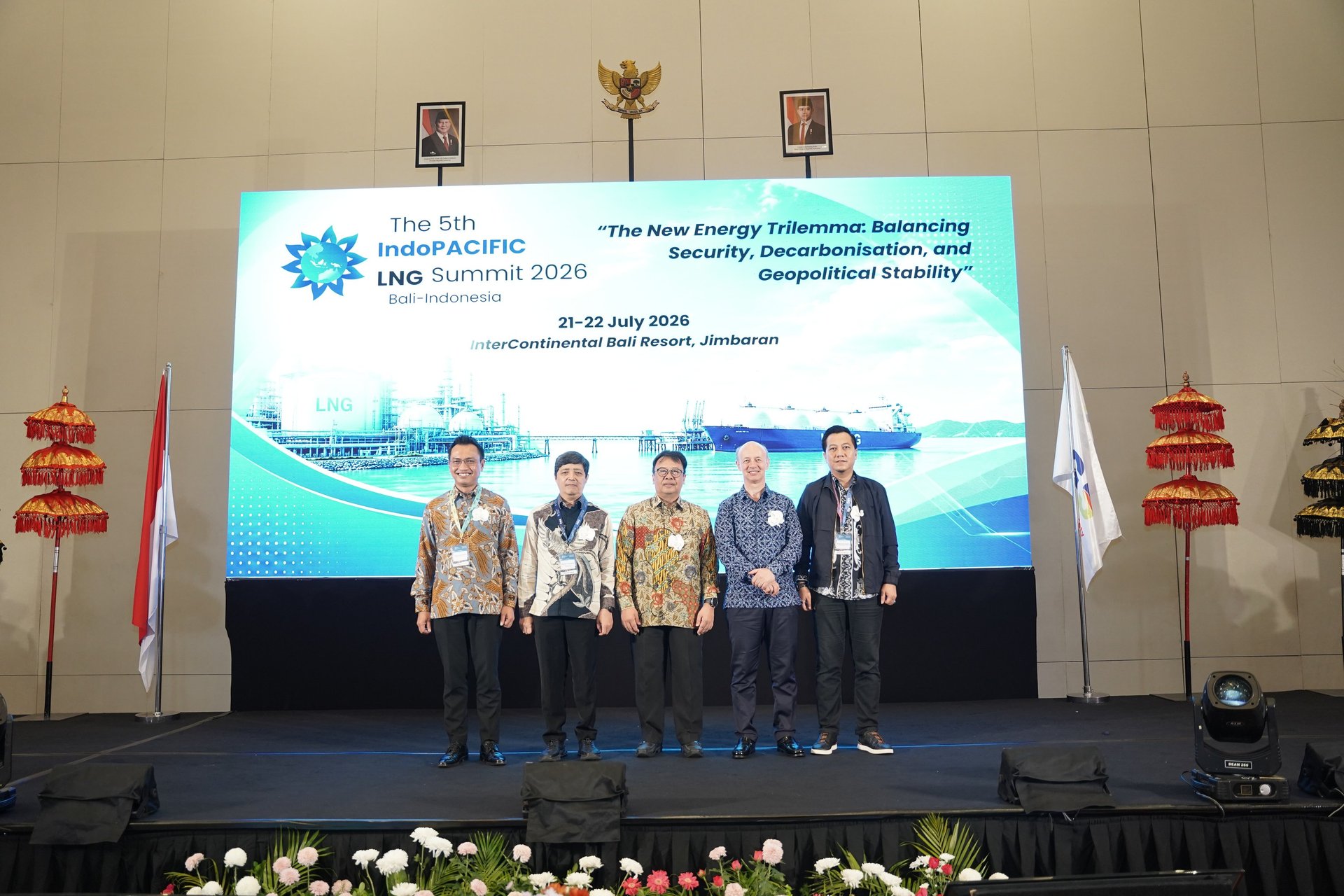
Day 2-The 5th of IndoPacific LNG Summit 2026
Bringing together global policymakers, industry executives, and energy experts, the first conference day of The 5th IndoPacific LNG Summit 2026 set the stage for meaningful dialogue on the evolving energy trilemma, highlighting the importance of collaboration, resilient LNG markets, and strategic investment in shaping the future of energy across the Indo-Pacific.
IGS Editorial
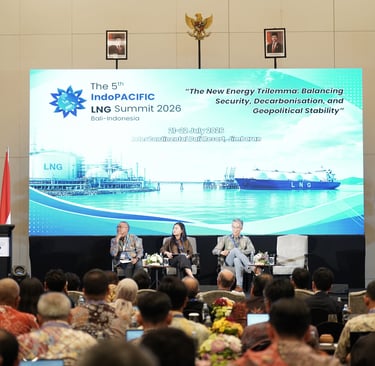
Bali, Indonesia – 21 July 2026 — The conference sessions of The 5th IndoPacific LNG Summit 2026 officially commenced today at the Jimbaran Convention Center-InterContinental Bali Resort, welcoming policymakers, global energy executives, LNG producers, infrastructure developers, investors, and technology leaders from across the Indo-Pacific and beyond to address one of the industry's most pressing challenges: balancing energy security, decarbonisation, and geopolitical stability.
Held under the theme "The New Energy Trilemma: Balancing Security, Decarbonisation, and Geopolitical Stability," this year's summit serves as a platform for high-level dialogue on strengthening LNG supply chains, accelerating infrastructure investment, and reinforcing natural gas as a reliable transition fuel in an increasingly complex global energy landscape.
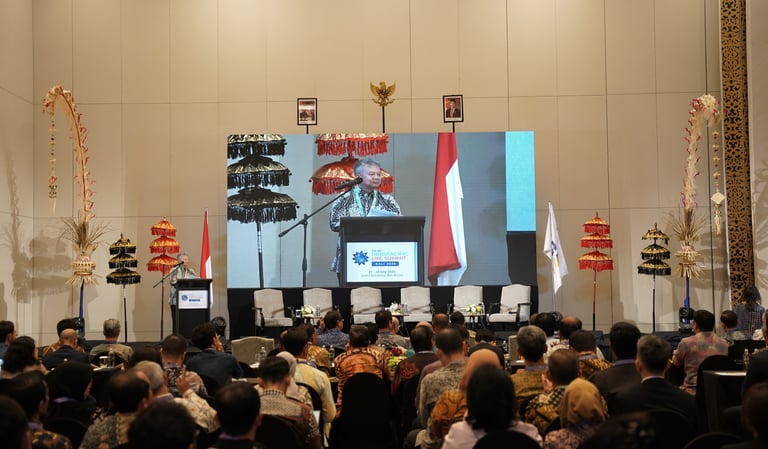
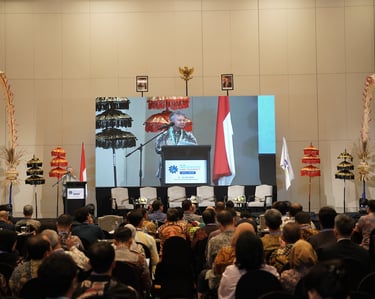
Opening the conference, Aris Mulya Azof, Chairman of the Indonesian Gas Society (IGS), highlighted that energy security has once again become a strategic global priority as geopolitical tensions and supply chain disruptions continue to reshape international energy markets. He emphasized that the three pillars of today's energy trilemma—security, decarbonisation, and geopolitical stability—can no longer be addressed independently, calling for stronger collaboration among governments, industry, financial institutions, and technology providers to build a more resilient and sustainable energy future.
The summit was officially opened with a keynote address by Hendra Gunawan, Director of Program Development, Directorate General of Oil and Gas, who reaffirmed the strategic role of Indonesia's oil and gas sector in supporting national economic growth and energy resilience. He underscored the importance of natural gas as a key pillar of Indonesia's energy transition, highlighting continued upstream exploration, the expansion of gas and LNG infrastructure, the recent Geliga-1 gas discovery, and the landmark Abadi Masela LNG project as significant milestones in strengthening the country's long-term energy security while advancing lower-carbon development.


Throughout the day, delegates gained valuable insights from a distinguished lineup of international keynote speakers representing leading organizations across the global energy sector. Andrea Stegher, President of the International Gas Union (IGU), explored strategies for building resilient LNG supply chains amid evolving global market dynamics. Rakhmad Dewanto, Director of Corporate Planning and Business Development at PT PLN (Persero), discussed Indonesia's approach to securing LNG supply in an era of geopolitical uncertainty.
In the afternoon sessions, Sam Chua, Partner at Rystad Energy, presented a ten-year outlook for LNG demand across emerging Southeast and South Asian markets, followed by Hiroki Sato, Senior Managing Executive Officer and Division CEO of Global Business at Chubu Electric, who examined LNG's evolving role in supporting decarbonisation under changing regulatory and market conditions. Closing the keynote series, Rajat Agarwal, Partner at McKinsey & Company, shared perspectives on global energy market shifts, emerging risks, and the strategic implications shaping the future of the LNG industry.
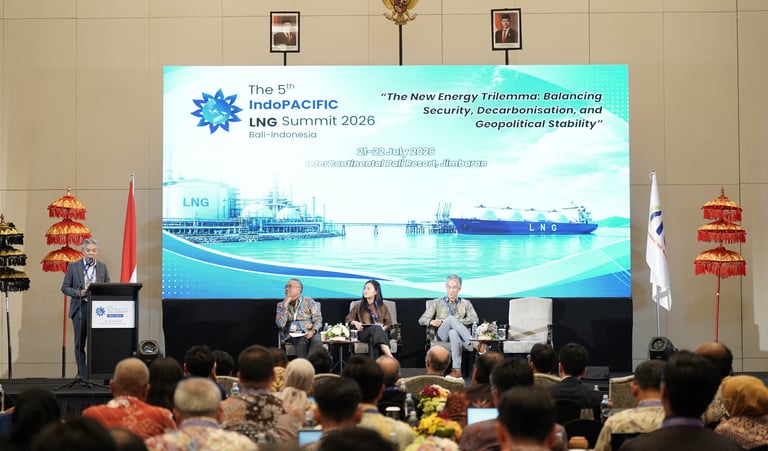
Complementing the keynote sessions, a series of panel discussions brought together leading experts from across the LNG value chain to examine the challenges and opportunities facing the industry. Representatives from INPEX Corporation, Argus Media, LNG Japan Corporation, Naturgas, MOL Indonesia, S&P Global Commodity Insights, SEFE Marketing & Trading Singapore, and Singapore GasCo exchanged perspectives on strengthening LNG deliverability, navigating procurement risks in increasingly constrained markets, improving supply chain resilience, and adapting to geopolitical uncertainty. Moderated by experienced industry leaders from the Indonesian Gas Society, the discussions reinforced the importance of international cooperation, market transparency, and long-term investment to ensure a secure and reliable LNG ecosystem for the Indo-Pacific region.
Beyond the conference sessions, delegates also engaged in networking activities that encouraged knowledge sharing and fostered new partnerships among governments, industry, and technology providers. These interactions reflected the summit's broader objective of strengthening regional cooperation and developing practical solutions to support both energy security and the ongoing energy transition.
As the first conference day concluded, one message resonated consistently across every keynote address and panel discussion: navigating today's energy trilemma requires more than technological innovation. It demands resilient supply chains, sound policy, sustained investment, and stronger cross-border collaboration. Through these discussions, The 5th IndoPacific LNG Summit 2026 continues to reaffirm its role as one of the region's premier platforms for advancing dialogue, fostering strategic partnerships, and shaping a more secure, resilient, and sustainable energy future for the Indo-Pacific.
Bali, Indonesia – 21 July 2026 — The conference sessions of The 5th IndoPacific LNG Summit 2026 officially commenced today at the Jimbaran Convention Center-InterContinental Bali Resort, welcoming policymakers, global energy executives, LNG producers, infrastructure developers, investors, and technology leaders from across the Indo-Pacific and beyond to address one of the industry's most pressing challenges: balancing energy security, decarbonisation, and geopolitical stability.
Held under the theme "The New Energy Trilemma: Balancing Security, Decarbonisation, and Geopolitical Stability," this year's summit serves as a platform for high-level dialogue on strengthening LNG supply chains, accelerating infrastructure investment, and reinforcing natural gas as a reliable transition fuel in an increasingly complex global energy landscape.
Opening the conference, Aris Mulya Azof, Chairman of the Indonesian Gas Society (IGS), highlighted that energy security has once again become a strategic global priority as geopolitical tensions and supply chain disruptions continue to reshape international energy markets. He emphasized that the three pillars of today's energy trilemma—security, decarbonisation, and geopolitical stability—can no longer be addressed independently, calling for stronger collaboration among governments, industry, financial institutions, and technology providers to build a more resilient and sustainable energy future.
The summit was officially opened with a keynote address by Hendra Gunawan, Director of Program Development, Directorate General of Oil and Gas, who reaffirmed the strategic role of Indonesia's oil and gas sector in supporting national economic growth and energy resilience. He underscored the importance of natural gas as a key pillar of Indonesia's energy transition, highlighting continued upstream exploration, the expansion of gas and LNG infrastructure, the recent Geliga-1 gas discovery, and the landmark Abadi Masela LNG project as significant milestones in strengthening the country's long-term energy security while advancing lower-carbon development.
Throughout the day, delegates gained valuable insights from a distinguished lineup of international keynote speakers representing leading organizations across the global energy sector. Andrea Stegher, President of the International Gas Union (IGU), explored strategies for building resilient LNG supply chains amid evolving global market dynamics. Rakhmad Dewanto, Director of Corporate Planning and Business Development at PT PLN (Persero), discussed Indonesia's approach to securing LNG supply in an era of geopolitical uncertainty.
In the afternoon sessions, Sam Chua, Partner at Rystad Energy, presented a ten-year outlook for LNG demand across emerging Southeast and South Asian markets, followed by Hiroki Sato, Senior Managing Executive Officer and Division CEO of Global Business at Chubu Electric, who examined LNG's evolving role in supporting decarbonisation under changing regulatory and market conditions. Closing the keynote series, Rajat Agarwal, Partner at McKinsey & Company, shared perspectives on global energy market shifts, emerging risks, and the strategic implications shaping the future of the LNG industry.
Complementing the keynote sessions, a series of panel discussions brought together leading experts from across the LNG value chain to examine the challenges and opportunities facing the industry. Representatives from INPEX Corporation, Argus Media, LNG Japan Corporation, Naturgas, MOL Indonesia, S&P Global Commodity Insights, SEFE Marketing & Trading Singapore, and Singapore GasCo exchanged perspectives on strengthening LNG deliverability, navigating procurement risks in increasingly constrained markets, improving supply chain resilience, and adapting to geopolitical uncertainty. Moderated by experienced industry leaders from the Indonesian Gas Society, the discussions reinforced the importance of international cooperation, market transparency, and long-term investment to ensure a secure and reliable LNG ecosystem for the Indo-Pacific region.
Beyond the conference sessions, delegates also engaged in networking activities that encouraged knowledge sharing and fostered new partnerships among governments, industry, and technology providers. These interactions reflected the summit's broader objective of strengthening regional cooperation and developing practical solutions to support both energy security and the ongoing energy transition.
As the first conference day concluded, one message resonated consistently across every keynote address and panel discussion: navigating today's energy trilemma requires more than technological innovation. It demands resilient supply chains, sound policy, sustained investment, and stronger cross-border collaboration. Through these discussions, The 5th IndoPacific LNG Summit 2026 continues to reaffirm its role as one of the region's premier platforms for advancing dialogue, fostering strategic partnerships, and shaping a more secure, resilient, and sustainable energy future for the Indo-Pacific.
Office:
Rasuna Office Park, 3rd Floor Unit TO-07
Complex Rasuna Epicentrum
Jl. HR. Rasuna Said, Kuningan, Jakarta 12960
Tel : +62 21 8378 3757, 8379 5203
Fax : +62 21 8378 1126, 8379 5302
Email : secretariat@indonesiangassociety.com
© 2014. Indonesian Gas Society. All rights reserved.
Mailing Address:
Jl.Kebon Baru 3 No.4 RT.03/RW.09 Tebet, Asem Baris,Jakarta Selatan, 12830